Owning a home is a rewarding achievement, but it requires an ongoing investment of time, attention, and effort. The exterior of your property acts as a continuous shield, standing between your family and the unforgiving elements. From torrential downpours and blistering summer heat to freezing winter snow, every square inch of your home’s outer envelope is constantly working to keep the interior safe, dry, and comfortable.
Securing the Footprint
Spotting and Sealing Basements and Slabs Early
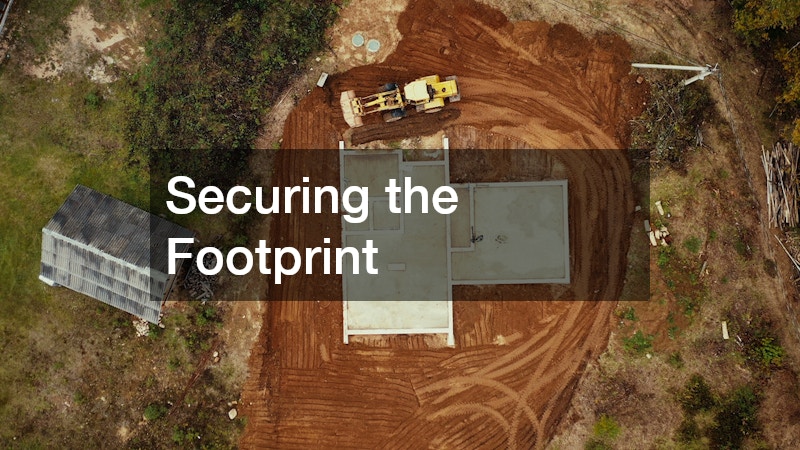
The integrity of your entire living space depends entirely on the stability of what lies beneath it. Over time, the soil surrounding your home shifts due to moisture changes and natural settling, exerting incredible pressure on your underground structures. As a homeowner, you need to conduct regular visual inspections of your lowest level, looking closely at exposed concrete walls and floors.
It is crucial to understand the difference between normal hairline settling cracks and signs of true structural distress. Hairline cracks are common as a home settles into its landscape. However, if you notice staircase-shaped cracks in brickwork, wide diagonal fractures, or sections of the wall bulging inward, you are looking at serious structural movement. Another major warning sign is interior doors and windows that suddenly stick or jam in their frames.
For minor fissures, a proactive homeowner can use DIY injection kits filled with polyurethane or epoxy. However, when large cracks appear or walls begin to bow, professional intervention is mandatory. Heavy-duty fixes may require underpinning the house with steel piers driven deep into the bedrock, structural wall stitching, or comprehensive concrete foundation repair to lift and stabilize the shifted weight of the structure safely.
Upgrading Walkways, Retaining Walls, and Patios
The areas immediately surrounding your home play a massive role in how water interacts with your structural base. Soil erosion, improper grading, and cracked hard surfaces can cause rainwater to pool directly against your exterior walls rather than shedding away from them. This standing water saturates the ground, weakens the structural footprint, and increases the likelihood of basement flooding.
To keep water at bay, you must evaluate the slope of your landscape. The ground should slope away from your home at a decline of at least six inches over the first ten feet. If your yard naturally slopes toward your house, you may need to install French drains—gravel-filled trenches containing perforated pipes—to redirect the water flow safely to a lower point.
Retaining walls must also be monitored closely. If a retaining wall begins to tilt or crack under the weight of the earth, it can cause a massive slide of soil that puts immense pressure on your home. Upgrading these elements and re-engineering your outdoor spaces can dramatically improve drainage. When planning these transformations, partnering with an experienced hardscaping service ensures that terraced gardens, stone paths, and patio pavers are installed with proper aggregate bases and slope calculations designed to protect your home’s perimeter.
Restoring the Framework and Surrounding Grounds
Fixing Crumbling Driveways and Walkways
Your driveway and primary walkways bear the brunt of heavy vehicular traffic and weather. When these surfaces crack, pit, or heave, they pose severe tripping hazards, degrade property value, and allow water to seep underneath, destroying the subbase over time.
For properties with asphalt driveways, seasonal maintenance is key. Water that penetrates small cracks will expand when it freezes, transforming minor blemishes into massive potholes. Homeowners should prioritize routing out weeds from cracks, pressure washing the surface, and applying a high-quality rubberized cold-pour filler. Following up with a premium asphalt emulsion sealer every two to three years rejuvenates the surface and blocks harmful UV rays.
Small-scale blacktop repair can be easily managed on a weekend with a bucket of tamper patch and a driveway sealing kit. However, if your driveway is riddled with deep alligator cracking, significant sinking, or widespread crumbling, a simple patch will not suffice. For advanced degradation, you will need to completely excavate the ruined material, re-stabilize the gravel subgrade, and hire professional concrete contractors to pour a fresh, durable, and properly reinforced surface that can handle the elements for decades.
Managing Overhead Hazards and Root Intrusion
While it is easy to focus strictly on building materials, the living elements around your property pose a significant threat to your exterior structure if left unchecked. Trees provide beautiful shade, but their roots can extend far wider than their canopy. These powerful networks can grow directly underneath your driveways, sidewalks, and even your structural base, lifting heavy materials and causing severe cracking.
Furthermore, the overhead canopy requires constant vigilance. Dead or dying branches hanging over your living structures are ticking time bombs, waiting for a high-wind event to snap and crash through your roof, siding, or gutters. Even healthy branches can cause quiet, long-term damage if they rub against your home, scraping away paint layers and providing a direct highway for pests.
-
Inspect trees annually for signs of internal rot or shelf fungus on the trunk.
-
Prune back all branches so they maintain a minimum clearance of six to ten feet from your roofline.
-
Install root barriers along your foundation if you have aggressive tree species planted too close.
-
Clear away dead wood promptly to prevent it from falling unexpectedly during severe storms.
For standard pruning within reach of a pole saw, many homeowners can handle the work safely. However, if a tree is large, dead, located near power lines, or leaning toward your roof, DIY attempts are incredibly dangerous. In these scenarios, utilizing professional tree services is the only safe option. Certified arborists possess the rigging gear and expertise required to safely dismantle massive limbs or remove entire trees without risking damage to your home.
Fortifying the Protective Shell
Repairing External Wall Systems and Siding
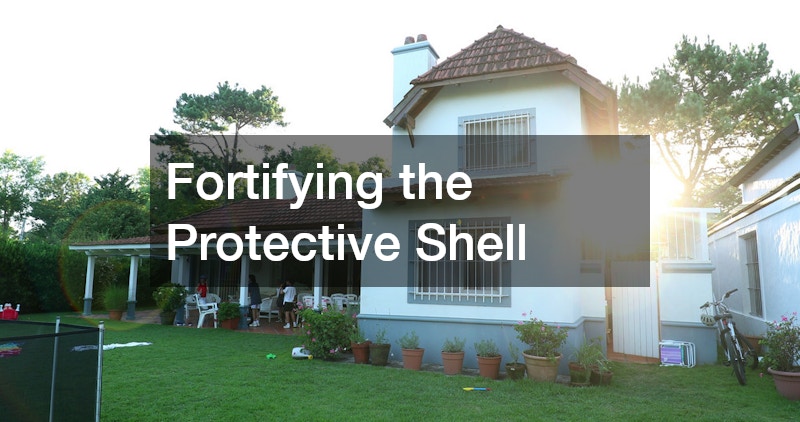
Once your base and surrounding grounds are secure, your attention must shift upward. Your siding acts as the primary windbreak and water barrier for your framing. Any breach in this vertical defense allows moisture to invade your wall cavities, causing unseen wood rot, ruining insulation value, and encouraging dangerous mold growth inside your living spaces.
Homeowners should inspect their siding at least twice a year, looking for warped panels, cracked boards, or loose trim. Pay special attention to the areas around windows and doors where caulking dries out, cracks, and pulls away. Replacing old caulking with a premium, exterior-grade polyurethane or silicone sealant is one of the cheapest yet most effective ways to preserve your home’s shell.
For homes clad in plaster coatings, moisture management is incredibly nuanced. Small hairline cracks can often be painted over with elastomeric coatings. However, if you notice large chunks chipping off, brown water stains, or a hollow sound when tapping on the wall, water has likely penetrated behind the system and is rotting the underlying wood framing. Remediating widespread damage requires specialized knowledge of moisture barriers, making it essential to contact a trusted local stucco repair business to restore the system’s water tightness and aesthetic appeal.
Maintaining Clear Drainage and Soffit Ventilation
A perfectly sealed wall system can still fail if your roof’s drainage system is neglected. Gutters and downspouts are designed to catch thousands of gallons of rainwater rushing off your roof and carry it safely away from your vertical walls. When gutters become clogged with leaves, twigs, and roof granules, the water has nowhere to go but backward and over the sides.
Overflowing water will cascade directly down your siding, soaking window frames, rotting fascia boards, and saturating the soil directly next to your underground walls. To prevent this, gutters must be cleaned at least twice a year—more frequently if your property is surrounded by mature trees.
-
Scoop out all debris manually using a gutter trowel, working away from the downspouts.
-
Flush the entire gutter length with a garden hose to check for proper pitch and flow.
-
Clear clogged downspouts by running a plumber’s snake down the pipe.
-
Check that all downspout extensions terminate at least three to five feet away from your home’s base.
Beyond water drainage, you must ensure that your soffit vents are completely clear of debris or insulation. These vents work in tandem with your ridge vents to create a continuous updraft of cool air through your attic. Without this vital ventilation, heat and moisture trap themselves in your roof structure during the summer, baking your shingles from the inside out and causing premature failure of your roofing materials.
Mastering the Rooftop
Handling Urgent Shingle Damages and Flashing Leaks
The highest asset on your home is also the most critical component of your exterior defenses. Your roof is exposed to intense thermal cycling, direct solar radiation, high winds, and impact from debris. Because you cannot easily see the top of your house from your daily routine, roof issues often go unnoticed until a brown water stain materializes on your ceiling.
Conducting a safe visual roof inspection does not require climbing a ladder. You can spot many major vulnerabilities from the safety of the ground using a good pair of binoculars. Look closely for shingles that are curling at the edges, buckling in the center, or missing entirely after a heavy windstorm. Pay special attention to the flashing around chimneys, dormers, and roof valleys. Flashing is the number one source of roof leaks; if the metal rusts through or the sealant backing it fails, water will pour into your home during the next downpour.
If you discover a minor issue, addressing it immediately can extend the life of your roof by years. Small repairs might involve applying a bead of roofing cement under a loose tab or replacing a couple of damaged shingles. However, navigating roof slopes is inherently dangerous and requires specialized safety gear and precise material integration. For peace of mind and long-lasting security, sourcing a reputable local roof repair specialist is always the wisest choice to ensure the patch holds up against future storms.
Choosing the Right System for Flat and Low-Slope Extensions
While traditional sloped roofs rely on gravity to shed water quickly over overlapping shingles, flat or low-slope roofs present a completely different engineering challenge. Found commonly on modern architectural homes, garages, and extensions, flat roofs allow water to move very slowly, often leading to temporary pooling. Because water sits on these surfaces for extended periods, standard asphalt shingles are entirely useless, as water will simply seep between the overlaps.
Flat roofs require a continuous, monolithic membrane system that is completely impervious to standing water. Modern technology has introduced highly durable, lightweight, and energy-efficient single-ply membranes designed to handle standing water, resist UV degradation, and reflect sunlight to lower your home’s cooling costs.
When updating a low-slope structure, the quality of the installation is everything because there is zero margin for error with flat water drainage. The seams between membrane sheets must be flawlessly fused together to prevent leaks. Homeowners tackling a flat-roof renovation should look specifically for a certified pvc roofing contractor. Polyvinyl chloride (PVC) membranes feature seams that are heat-welded together using specialized hot-air tools, creating a permanent, physical bond that is stronger than the membrane itself, guaranteeing decades of leak-free performance.
Upgrading to High-Durability Materials for Lifetime Protection
Eventually, every roof reaches the end of its natural lifespan. When minor repairs become a monthly occurrence, and your shingles look bald due to widespread granule loss, patching is no longer a viable financial strategy. It is time to invest in a complete roof replacement. While a new roof represents a significant upfront capital expenditure, it is also an opportunity to dramatically upgrade your home’s energy efficiency, wind resistance, and architectural style.
When evaluating replacement options, you must weigh upfront costs against long-term durability and maintenance requirements. Traditional three-tab asphalt shingles are budget-friendly initially, but they typically require replacement every fifteen years. Upgrading to heavy-duty architectural shingles offers improved wind ratings and a deeper appearance that mimics natural wood shakes.
For homeowners seeking a definitive, permanent solution, modern residential metal roofing systems have soared in popularity. Standing-seam metal roofs hide all fasteners beneath interlocking panels, eliminating leak points and easily withstanding severe hail and hurricane-force winds. To explore these premium options, you should partner with a factory-certified metal roofing contractor for specialized metal installs or a highly reviewed local roof installer for traditional premium composite and asphalt systems to ensure your comprehensive manufacturer warranties remain fully intact.
Maintaining the exterior of your home is not a series of disconnected chores; it is a holistic strategy designed to protect your greatest financial asset. Every component of your home’s outer shell relies heavily on the performance of the others. A beautifully maintained roof is useless if your surrounding landscape is rotting out your foundation, and a perfectly stable basement will eventually be ruined if a hidden roof leak is quietly rotting your structural walls from above.