Home repairs are a normal part of maintaining a property, but not every problem should be handled as a do-it-yourself project. Some issues can begin as minor inconveniences and develop into expensive damage when they aren’t addressed promptly. A small leak, slow drain, or damaged section of exterior material can affect surrounding areas if the underlying problem continues.
From plumbing and drainage problems to roofing, gutters, and siding, several parts of a home can benefit from timely attention. Understanding when professional help is warranted can protect the property, reduce disruption, and help homeowners make informed repair decisions.
Address Leaks and Plumbing Problems Early

Plumbing problems can range from minor faucet leaks to issues hidden behind walls or beneath floors. While some problems may appear manageable at first, ongoing water leaks can contribute to damaged materials, staining, mold growth, and deterioration of surrounding surfaces.
A plumber can inspect the source of a leak and determine whether the issue involves a fixture, supply line, drainpipe, or another component of the plumbing system. This is particularly useful when the source isn’t immediately visible.
Homeowners should pay attention to unexplained moisture under sinks, damp cabinets, water stains, unusual sounds inside walls, or consistently wet areas around plumbing fixtures. A sudden drop in water pressure can also warrant investigation, especially when it occurs without an obvious explanation.
Some plumbing issues are also connected to problems elsewhere in the system. For example, recurring backups or drainage problems could indicate an obstruction deeper within the plumbing rather than a simple issue at the fixture.
Professional assistance is especially appropriate when water is leaking near electrical components, when a pipe has burst, or when water is causing visible damage. Quickly shutting off the appropriate water supply can help limit damage while professional help is arranged.
Restore Reliable Hot Water When Problems Arise
Hot water is easy to take for granted until a water heater begins producing inconsistent temperatures or stops working. A sudden loss of hot water can interfere with bathing, cleaning, laundry, and other daily activities.
Signs that a water heater needs attention can include insufficient hot water, fluctuating temperatures, unusual noises, leaks around the tank, discolored water, or water pooling near the unit. The cause can vary depending on the type and age of the equipment.
Water heater repair may address problems involving heating components, controls, connections, valves, or other parts of the system. In some cases, repairs may not be practical if the unit is severely deteriorated or nearing the end of its useful service life.
Homeowners shouldn’t ignore water around a water heater. Even a small amount of moisture can indicate a leak that could become more serious. Turning off the water supply and following the manufacturer’s safety instructions can help limit problems until the unit can be evaluated.
Because water heaters involve both water and energy sources, repairs can carry safety considerations. A qualified professional can determine the cause of the problem and explain whether repair or replacement is appropriate.
Clear Persistent Drainage Problems
Slow drains are common household nuisances, but recurring drainage problems can indicate more than a temporary blockage. A drain that repeatedly slows down after being cleared may have an obstruction farther along the line.
Clogged drain repairs can involve identifying the location and cause of the obstruction before selecting an appropriate method for clearing it. Hair, soap residue, grease, food particles, and other materials can accumulate in different types of drains.
Homeowners may notice warning signs such as gurgling sounds, unpleasant odors, standing water, or multiple drains becoming slow at the same time. When several fixtures experience drainage problems simultaneously, the issue may involve a larger portion of the plumbing system.
Repeatedly using chemical drain cleaners can also be problematic. Some products can damage certain plumbing materials or create hazardous conditions if they are mixed with other substances. Following product directions and seeking professional assistance for persistent problems can be a safer approach.
A professional evaluation can also help identify contributing factors. Clearing the immediate blockage may restore drainage, but understanding why the problem keeps returning can help address the underlying issue.
Resolve Toilet Blockages Before They Worsen

A clogged toilet is one of the more noticeable household plumbing problems because it can interfere with a basic daily necessity. A minor blockage may sometimes be cleared with a plunger, but recurring or severe blockages deserve additional attention.
Homeowners should avoid repeatedly flushing a toilet that isn’t draining properly. Additional flushing can cause the bowl to overflow and send contaminated water onto the bathroom floor.
If basic clearing methods don’t resolve the problem, the obstruction could be farther into the drain line. Other warning signs include gurgling from nearby fixtures, water backing up into the tub or shower, or multiple plumbing fixtures draining slowly.
A recurring toilet blockage can sometimes indicate a larger drainage problem rather than an isolated toilet issue. A professional can inspect the system and determine whether the problem involves the toilet itself or a connected drain line.
Prompt attention can help limit water damage and reduce the disruption caused by an unusable bathroom fixture. Homeowners should also avoid flushing items that aren’t designed to break down in plumbing systems, as these materials can contribute to blockages.
Protect Your Basement From Water Intrusion
Basements can be vulnerable to water intrusion during heavy rainfall, snowmelt, or periods when groundwater levels rise. A sump pump helps remove collected water and can be an important part of a home’s water management system.
Signs of a sump pump problem can include unusual noises, failure to activate when water rises, frequent cycling, standing water in the sump pit, or water appearing on the basement floor.
Sump pump repair can address certain equipment or system problems, but the appropriate solution depends on the cause. A professional can inspect the pump, discharge line, float mechanism, and other components to determine what isn’t working properly.
Homeowners should take sump pump problems seriously, particularly when significant rain is expected. A malfunctioning pump can leave a basement vulnerable to water damage when it is needed most.
Regular maintenance can also help identify potential problems before an emergency occurs. Keeping the sump pit clear and checking that the discharge system is functioning properly can support reliable operation. Backup power options may also be worth considering for homes that depend heavily on a sump pump during storms.
Know When Your Roof Needs Professional Attention
The roof protects the home from rain, snow, wind, and other outdoor conditions. Because much of the roof is difficult to inspect from ground level, damage can sometimes go unnoticed until it produces visible signs inside the house.
A local roofer can evaluate roofing materials and identify areas that need repair or further inspection. Professional assistance can be useful after severe weather, when leaks appear, or when shingles show signs of deterioration.
Warning signs can include missing or damaged shingles, visible sagging, damaged flashing, granules accumulating in gutters, or water stains on ceilings and walls. Some problems may not be obvious from the ground, which is one reason periodic professional inspections can be valuable.
Homeowners should avoid climbing onto a roof when they aren’t equipped or trained to do so. Roof surfaces can be steep, slippery, or unstable, creating a risk of falls.
After a storm, documenting visible damage from the ground can help homeowners communicate concerns to a professional. Prompt evaluation can also help determine whether the issue is isolated or part of a broader roofing problem.
Address Roof Damage Before It Spreads
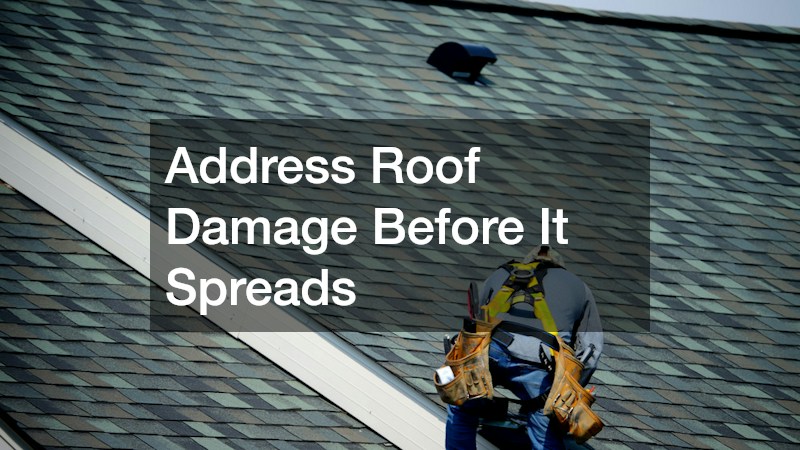
Roof damage can worsen when exposed to repeated rain, wind, temperature changes, and other weather conditions. A damaged shingle or compromised flashing may allow water to reach materials beneath the visible roof surface.
Roof repair can address localized problems before they develop into more extensive damage. Depending on the situation, repairs may involve replacing damaged shingles, addressing flashing, repairing areas around roof penetrations, or correcting other sources of water intrusion.
Interior warning signs can provide important clues. Brown or yellow ceiling stains, damp attic insulation, peeling paint, or moisture around skylights can indicate that water is entering somewhere above.
Homeowners shouldn’t assume that a small stain means the roof only has a small problem. Water can travel along framing or other surfaces before becoming visible inside the home, meaning the visible location isn’t necessarily the point where water entered.
Temporary measures may help limit immediate exposure, but a lasting solution requires identifying the source of the problem. Addressing damage promptly can help protect insulation, drywall, framing, and other interior materials.
Maintain and Replace Worn Roofing Materials
Asphalt shingles are widely used on residential roofs, but they don’t last indefinitely. Weather exposure can gradually affect their appearance and performance, particularly as the roof ages.
An asphalt shingle roof may show signs of wear such as curling, cracking, blistering, missing granules, or loose shingles. Individual damaged shingles can sometimes be replaced, while widespread deterioration may indicate that a larger portion of the roof needs attention.
Age is another factor to consider. Homeowners should know approximately when the current roof was installed and keep records of previous repairs when possible. These details can help when evaluating whether continued repairs make sense.
Ventilation and moisture management can also affect roof performance. Problems in the attic can contribute to moisture buildup and temperature extremes that affect roofing materials.
Routine inspections can help identify deterioration before leaks develop. After severe weather, an additional inspection may be appropriate if the roof has been exposed to strong winds, hail, falling branches, or other hazards.
Keep Rainwater Flowing Away From Your Home
Gutters direct rainwater away from the roof and foundation, making them an important part of the home’s exterior water management system. When gutters become clogged, damaged, or improperly aligned, water can spill over the sides and collect near the foundation.
Gutter repair may involve correcting leaks, replacing damaged sections, adjusting slopes, or addressing loose fasteners. In some cases, a section may need to be replaced rather than repaired.
Homeowners should watch for sagging gutters, water pooling beneath downspouts, overflowing during rain, peeling paint near the gutter system, or visible separation at joints. These signs can indicate that water isn’t moving through the system as intended.
Cleaning gutters regularly can reduce the accumulation of leaves, twigs, and other debris. However, homeowners should use appropriate safety equipment and avoid working from unstable ladders. Hiring a professional may be preferable when gutters are difficult to access or when repairs require work at significant heights.
Downspouts deserve attention, too. They should direct water far enough away from the foundation to reduce the likelihood of water collecting against the home.
Restore and Protect Your Home’s Exterior
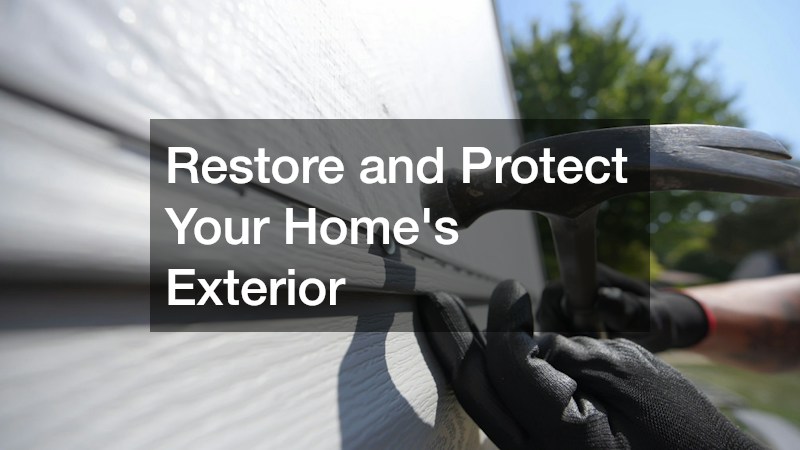
Siding helps protect exterior walls from weather while contributing to the appearance of the property. Damaged siding can allow moisture to reach areas behind the exterior covering, potentially contributing to deterioration.
A siding contractor can inspect damaged areas and determine whether individual sections can be repaired or whether replacement is more appropriate. The right solution depends on the siding material, extent of damage, age of the installation, and availability of matching materials.
Homeowners should watch for cracked, warped, loose, or missing siding. Staining, soft areas, or signs of moisture behind or around siding can also warrant professional attention.
Different siding materials have different maintenance requirements. Vinyl, fiber cement, wood, engineered materials, and other products can respond differently to weather and impact. Following the manufacturer’s care recommendations can help preserve the exterior.
Siding problems can sometimes occur alongside issues involving gutters, roofing, windows, or flashing. Water that repeatedly reaches the same area may cause damage across multiple exterior components. Addressing related problems together can help protect the wall assembly and improve the long-term performance of the exterior.
Knowing when to call a professional for home repairs can help homeowners respond to problems before they become larger disruptions. While some basic maintenance tasks can be handled as part of regular home care, issues involving plumbing systems, water heaters, drainage, roofing, gutters, and siding can require specialized knowledge and equipment.
Ultimately, home maintenance is about protecting both the property and the people who live there. Recognizing when a repair has moved beyond a simple household task can help homeowners address problems responsibly, preserve important systems, and keep their homes functioning as intended.